Sunday, December 14, 2014

Phrase of the Week: TO PROTECT AND TO SERVE [Part 1 of 7]

Today, I begin a seven-part series commenting on events in Ferguson, MO, Cleveland, OH, and New York City, N.Y.

HISTORICAL BACKGROUND
The title of this series is "To Protect and to Serve", which is recognized as the de facto motto of police departments across the country.  The phrase first came into use in 1955 by the Los Angeles Police Department (LAPD), following a contest in Beat Magazine, an LAPD newsletter which is still produced today.  The winning entry was "To protect and to serve", which became the motto of the police academy.  You may have seen it on the side of police cars, which began in Los Angeles in 1963.
The motto appears as above or in reverse ("to serve and to protect") on police cars in various municipalities across the country.

Three recent events will be highlighted here, but I wish to make it clear that this is not an exhaustive list.  These are three of the most current and most notable examples of senseless murder by police.

THE INCIDENTS
FERGUSON, MISSOURI
On Saturday, August 9, Michael Brown allegedly stole some Cigarellos from a local convenience store, minutes before his fateful encounter with Officer Darren Wilson.  The surveillance video is claimed by police to show Michael Brown committing the crime.

While walking with his friend Dorian Johnson (who was standing behind the man in the video) in the street, Office Darren Wilson pulls up to them. How events then unfolded are recounted differently between witnesses and police.

Some said that Officer Wilson used profanity to tell Brown and Johnson out of the middle of the street; others said Brown was the one who used profanity in response to Officer Wilson.  Whether or not Officer Wilson saw the Cigarellos in Brown's hand and whether or not he knew about the robbery is unclear.  (By "unclear", I mean testimony that is unverifiable.)  Whether the tussle in the police car between Brown and Wilson was Wilson pulling Brown into the car or Brown going for Officer Wilson's gun is unclear.  Brown's final move (after running away from Wilson and then turning around to face Wilson again) was either a walking back toward Wilson with his hands up or running "full charge" toward Wilson; that, too, is unclear.  (CNN posted a synopsis of events early last month.)  At no point was Brown armed ... unless you consider Cigarellos to be lethal weapons.

The result was eighteen-year-old Michael Brown shot dead in the street from multiple gunshots.  His body was left in the street, uncovered, for approximately four-and-a-half hours.  The police claimed it was because they didn't want to disturb the body and crime scene.

Following an initial investigation, a grand jury was formed.  The grand jury proceedings began on August 20, eleven days after the shooting.

CLEVELAND, OHIO
In a public playground, twelve-year-old Tamir Rice was taking in and out of his pocket an Airsoft brand pellet gun, one that resembled a real handgun.  It was later revealed that a ring on the end of the gun's nozzle (pictured below) which marks the gun as not real had been removed, rendering it, indistinguishable from a real weapon.


A local resident, seeing this, called 911.  It was an adult male stating that he was scared at the sight, but that he (a citizen, not an officer) believed the gun was probably fake.  He stated twice in the call that he believed the gun was likely fake, as well as the individual was "likely a juvenile".  Howevere, the dispatcher makes no mention to police of the likelihood of the gun being fake or of the individual's age.  Within eight minutes of the initial dispatch call, the first police car is calling for EMF assistance. 

In under two seconds after pulling up to Rice, Officer Timothy Loehmann fatally shoots Rice.  UNDER TWO SECONDS.


An investigation is under way, including one by the U.S. Justice Department.

NEW YORK CITY, NEW YORK
On July 17, Eric Garner was approached by police regarding his allegedly selling "loosies", individual cigarettes taken out of cigarette packs without tax stamps on them.  It is unclear whether or not Garner was, or had been, selling them.  Witnesses, however, said that Garner had just broken up a fight between two people.  The two people who were fighting had left the area when the police approached Garner.

As another NYPD officer is explaining to Garner why he's going to be arrested, Officer Daniel Pantaleo comes up on Garner from behind and puts him, and keeps him, in a blatant chokehold. 
[** Note: These videos may be difficult to watch.]


Eric Garner, 43, was murdered by police.  His final, haunting words were "I can't breathe" repeated over and over -- anywhere from nine to eleven times -- until he could say them no more.

After an initial investigation, a grand jury was convened and began hearing evidence in September.


These are the events that unfolded in Ferguson, Cleveland, and New York City that led to the senseless murder of three individuals.  Tomorrow, I will look at some of the mechanics behind these events as well as the grand jury trials (in two of the cases) that followed.

Terry


TOMORROW
PROCEDURAL AND LEGAL

Saturday, November 29, 2014

Phrase of the Day: DEATH WITH DIGNITY

Brittany Maytnard . . . a name that has garnered a lot of attention lately . . .

. . . not because she was financially well-off, not because she was famous for being famous (aka a reality TV star), and not because she was on trial for a salacious crime . . .

Brittany Maynard ended her life.

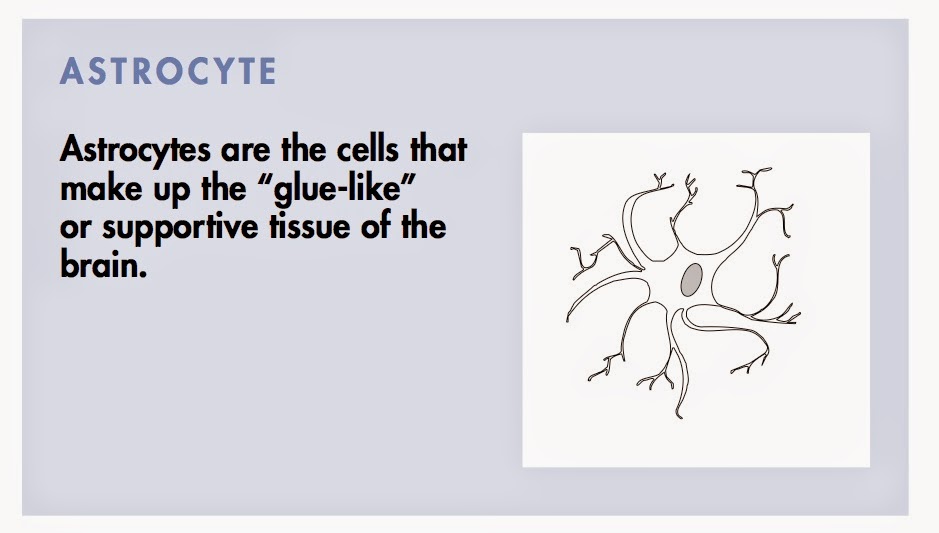
On the 1st of this year, Maynard was diagnosed with grade II astrocytoma, which is a form of brain cancer that develops in the astrocytes, which act like glue holding the brain together.
Credit: American Brain Tumor Association

She was initially told she had three to ten years to live.  In the Spring of this year, however, the astrocytoma had advanced to grade IV, the worst case, and was then told she probably only had six months left.  In addition, those six months would be very painful, feel dragged out, and would affect cognitive function.

In Oregon, where Maynard lived, there is a law on the books called the Death with Dignity Act, enacted in 1997, which allows for terminally ill individuals to end their lives with prescribed lethal medications.  Maynard had acquired those medications and used them on November 1.

In an October 7th piece for CNN, Brittany wrote:
                 "I would not tell anyone else that he or she should choose death with dignity.
                 My question is: Who has the right to tell me that I don't deserve this choice?"

Who indeed?

I believe there are multiple reasons why Brittany Maynard's decision is an uncomfortable one for others to hear and accept, even though the decision was, of course, hers alone to make.  I'll start with religious reasons.

Religion teaches the value of life.  I know about how many are killed in the name of religion (i.e. most wars have been started for religious reasons), but the teachings of religion without twisting meanings -- that's key -- is that life is special, is sacred, is to be valued.  To end one's own life goes, at simply a basic level, against that teaching and belief.  There are probably many religious persons who strongly disagree with her decision.

To that extent, three days after Maynard ended her life, a Vatican official, Monsignor Ignacio Carrasco de Paula, head of the Vatican's Pontifical Academy for Life, called her decision to end her life both undignified and reprehensible ... a condemnable death without dignity [my wording].  His argument was with her stance that a terminally ill person should have the freedom to end their life.  It may seem like a harsh stance to some, but religiously, it makes sense.  It's a bit of a quagmire if you say that all life is precious one one hand and then also say that taking one's own life is just fine on the other hand.  It would require breaking down the value of life to the quality of life.

That leads me into a second reason why Maynard's decision is hard to accept -- the stigma of suicide. Mention suicide to most persons and an uneasy feeling arises, maybe faint, but an uneasiness, nonetheless, is present.  How bad was it really? and Why didn't he/she ask for help? are common questions.  Survivors are left to feel angry, hurt, confused, and even guilty (i.e. "If only I knew").  While some have argued that such an act requires a level of bravery, considering the person is ending his/her life, the stigma is that it's an act of cowardice.

Another reason, I believe, is simply death itself.  Most individuals don't want to talk about death, let alone give it serious thought.  For most, death is scary, an uncomfortable subject, an unsettling prospect.  The irony is that cognitive acknowledgement is not a problem for those persons: you're born ... you live ... you die.  Pretty linear, pretty simple.  That's life.  We even plan for it in a linear, cognitive manner: life insurance, for example, which, let's face it, is really death insurance.

Life -- more specifically, the cycle of life -- includes death, not excludes it.  You came into existence one day and, one day, you will go out of existence.  Sure, look at the leaves on trees: how they die in the Fall and come back again in the Spring.  Eventually, however, those trees will die, no longer able to give birth to leaves.  That, too, is a part of life.

Now, let me address the issue of dignity.  A couple of definitions of the word "dignity" are "the state or quality of being worthy of honor or respect" and "self-respect".  One of things that strikes me about that word is the many ways it is applied.  When there is a dead person, on the street or in a morgue, the body is covered out of respect.  When there is a funeral, a viewing, or a memorial service, we pay our respects.  We even have those rituals to honor the dignity of the deceased.  When someone has a condition that is not considered socially okay -- allow me to use incontinence as an example -- there are undergarments designed for that person to maintain his/her dignity.  If someone ends up undressed, or at least stripped down to their underwear, someone offering something to cover up is for maintaining that individual's dignity.

We sure do have a lot of ways in which we honor dignity.  How one dies, in the face of a terminal illness, is not one of them.

I do think the stigma of Jack Kevorkian's right-to-die movement in the 1990's is a residual part of this.  Even though he had stated his goal was "helping the patient", "not to cause death", and "to end suffering", he was unable to avoid the courtroom and criticism.  He was convicted in 1999 of second-degree murder.  Some of his methodology had been questioned (i.e. not all patients were terminally ill, abbreviated length of consulting time, absence of psychiatric evaluation), which made equal levels of "right-to-die advocate" support and "murderer" opposition inevitable.

Before I get further into my point, let me address that there are plenty of people who would want to misconstrue things and use assisted suicide as an easy way out.  I am speaking solely of terminally ill individuals here. 

In reading Maynard's story, I am sure that there were many who viewed her decision as an easy way out, nothing more than giving up.  To those individuals, I would pose the following questions: Is it, then, more dignified for her to suffer?  In the face of death, is the only dignity to be found in suffering?  Why is someone choosing to end their suffering in the face of certain and painful death an undignified choice?  Does facing certain death nullify any final choices of the individual? 

Brittany Maynard did not want her life to be painful and miserable ... did not want her loved ones to see her that way ... did not want to simply be alive, or some semblance of alive, instead of living life to its fullest.  In short, Brittany Maynard did not take the easy way out and she did not give up.

She made a couple of videos regarding her decision.  The last one, released just days before her death, is below.  This is in her own words...

Personally, if faced with a terminal illness or condition, I would want to be able to end my life on my terms without any negative stigma or legal ramifications.  I applaud her decision.

Everyone should be able to make that decision in the face of terminal illness.  Currently, five states in the Unites States allow for assisted suicide -- Oregon, Washington, Montana, New Mexico, and Vermont.  Recently, there was a rally held in Maryland's state capital, Annapolis, urging lawmakers to put a death with dignity law on the books, and some states are considering it.  Here in New Jersey, the State Assembly passed a death with dignity bill, which goes on to the State Senate.  However, Governor Chris Christie has already said he will veto the bill.

When faced with a terminal illness, the only thing undignified is denying an individual the right to die on their terms and not the illness' terms.

For more information, check out Compassion & Choices' website.

Terry

Wednesday, October 29, 2014

Film of the Day: THE REAL STORY OF HALLOWEEN

[Dear readers, my sincerest apologies for the lengthier-than-usual time away from this blog.  You may have forgotten, after all this time, that I am recovering from a broken elbow.  It is a long story regarding my recovery, especially getting my physical therapy started, but my therapy has been going well.]

As Halloween is just days away, I thought the following documentary would be fun to watch.  It is titled The Real Story of Halloween, and was produced by the U.S. cable channel The History Channel in 2010.


HAPPY HALLOWEEN!

Terry

Monday, September 8, 2014

Movie of the Day: REVENGE OF THE ELECTRIC CAR

Just over a month ago, I posted about the 2006 documentary Who Killed the Electric Car?  Five years after the film's release, director Chris Paine released a sequel titled Revenge of the Electric Car.  As you watch this film, keep in mind that it was released after the 2008 economic fallout in this country and before the government bailout of major car manufacturers.


Terry

Wednesday, September 3, 2014

Movie of the Day: THE FOG OF WAR

As Secretary of Defense under John Kennedy and Lyndon Johnson, Robert S. McNamara was deeply involved in the events leading up to and the start of the Vietnam War.  The event that was the tipping point, leading the United States to go to war with Vietnam was the Gulf of Tonkin incident, in which North Vietnamese war ships engaged the USS Maddox.  This led to the Gulf of Tonkin Resolution and the commencement of war against North Vietnam.

The truth regarding whether or not the USS Maddox had been fired upon was in question immediately.  Books, articles, and interviews from those who were involved suggested the firing upon the USS Maddox never happened.  In the 2003 documentary The Fog of War, Robert McNamara addresses it directly.  Troubled by the events all of these years, McNamara, who was both applauded and reviled, agreed to making this film as a permanent record of what happened and his feelings about it.

McNamara died six years after the release of this film, but it remains his going on record about the build-up and execution of a futile war.  He has been condemned for going along with Lyndon Johnson's intentions for going to war and not coming out openly about it for decades, and praised for coming out with the truth of what really happened.  I invite you to watch this engaging documentary and see where he stands with you.

Fog Of War Eleven Lessons From The Life Of Robert S. Mcnamara from DCTV on Vimeo.


Terry

Thursday, August 21, 2014

Phrase of the Day: LOSS OF A GENIUS

Last week, the world lost a comedy legend, a comedy icon, and a comedy force, all in one person. On August 11, Robin Williams died at his home in Tiburon, California, from suicide. He was sixty-three years and his career, from his first appearance as Mork on 'Happy Days', spanned more than thirty-five years.

He was described by David Letterman as a "hurricane". His quick wit and rapid-fire delivery made him a real comedic force. He was one of those rare comedic actors who could also handle much more serious dramatic roles. He was awarded several awards including several Grammy Awards, Golden Globe Awards, Screen Actors Guild Awards, and an Academy Award.

I first saw him, as did many, on 'Mork and Mindy' and was immediately impressed with him. He could make me laugh uproariously and touch me deeply in more serious roles. He was truly gifted, which makes his death and how he died even more tragic.

He brought joy into my life and I wish I could thank him.

We still have a vast body of work from which he will be enjoyed for years to come. On that note, I will share one of the greatest interviews I believe he ever gave. It is from 2001 during his appearance on Inside the Actors Studio with host James Lipton. Enjoy!


Terry